Think about the last time you tried to explain something important to someone who did not fully understand you. Now imagine that situation in a dental chair, with a toothache, and a treatment decision on the table.
Language is not a small thing in healthcare. It shapes whether a patient describes their symptoms accurately, whether they understand their diagnosis, and whether they trust the person treating them.
At Channel Islands Family Dental in Port Hueneme, we believe that bilingual dental care is not just a feature, it is a foundation of quality treatment. When your dentist speaks your language, every part of the experience changes for the better.
Table of Contents
The link between language and accurate diagnosis

A dental diagnosis starts with a conversation. Before any X-ray or clinical exam, a good dentist listens. And what a patient says in that first exchange carries real diagnostic weight.
- Pain that sharpens with cold liquid is different from pain that pulses on its own.
- A gum that bleeds once a week is different from one that bleeds every time you brush.
- Pressure behind a tooth when you bite is a different signal than a dull ache that lingers.
These distinctions matter. They help a dentist determine whether the issue is a cavity, a cracked tooth, an infection, or something involving the dental pulp or the surrounding bone.
When a patient cannot describe their symptoms in precise terms because the conversation is happening in a language they do not fully control, those details get lost. They approximate. They simplify. And the clinician works with incomplete information.
The result is not always a wrong diagnosis. But it is a less confident one. And a less confident diagnosis often means more tests, more appointments, and more time before the patient gets actual relief. Clear language from the start closes that gap.
Trust is built in your own words
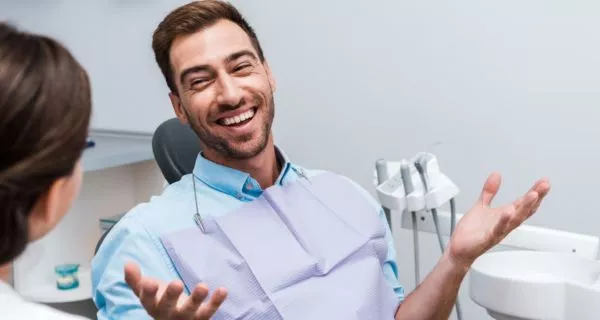
There is a reason people feel more at ease when someone speaks to them in their native language. It is not just familiarity. It is the sense that the other person is actually reaching you, not just transmitting information to you.
- In a dental setting, trust is the difference between a patient who returns for follow-up care and one who avoids the dentist for years.
- Fear of the dentist is already common. For many people, that fear is compounded by the anxiety of navigating a medical environment in a second language. You are not sure you understood the procedure correctly. You are not sure your question made sense. You nod when you should have asked for clarification.
- When a dentist and patient share a language, that friction disappears. The patient asks the question they were holding back. The dentist catches the hesitation and addresses it before it becomes avoidable. The relationship builds on something real.
At Channel Islands Family Dental in Port Hueneme, our bilingual team understands this. We do not just translate words. We make sure every patient leaves the appointment knowing what happened, what comes next, and why. That clarity is what turns a single visit into a long-term relationship with your oral health.
How language shapes the experience procedure by procedure
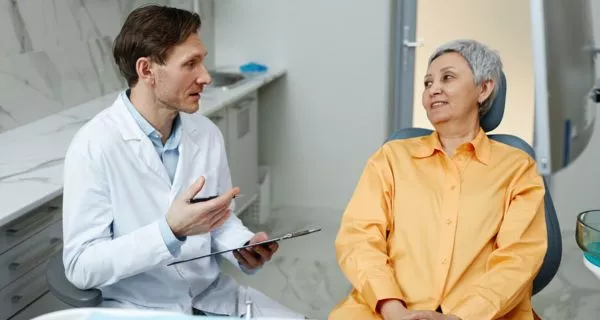
The impact of shared language shows up differently depending on the type of dental treatment. Here is how it matters across the most common procedures:
- Dental cleanings and exams: patients who can discuss their daily habits, diet, and concerns get more personalized preventive guidance. A hygienist who understands your lifestyle can give advice that actually fits it.
- Tooth extractions: describing the location and character of pain precisely helps the dentist assess whether there is active infection, bone involvement, or risk of complications before making any decisions.
- Root canal treatment: this procedure requires a patient who understands what is happening at each step. Knowing why the tooth is sensitive to heat, or why the pain wakes them at night, directly informs the endodontic approach.
- Dental implants and All-on-4: these are long-term investments that require a complete medical history, honest discussion of lifestyle factors, and clear expectations. A language barrier in this conversation creates real clinical risk.
- Orthodontics and Invisalign: treatment success depends heavily on patient cooperation. A patient who fully understands the plan and its requirements follows through more consistently.
- Pediatric dentistry: when a parent can explain their child’s anxiety, past experiences, or medical history in their own language, the child receives more tailored, less stressful care.
In every case, the common thread is information flow. The more accurately information travels between patient and provider, the better the outcome.
Informed consent means actually understanding what you are agreeing to
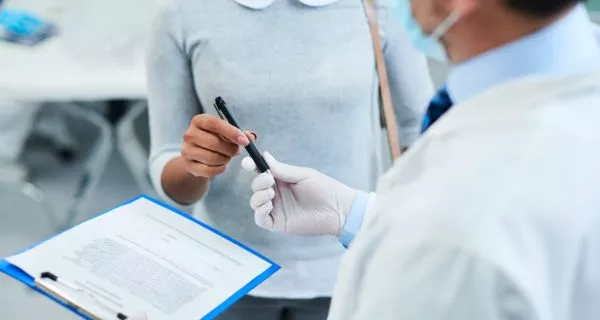
Informed consent is a cornerstone of ethical healthcare. Before any procedure, a patient has the right to understand what will be done, what the risks are, what the alternatives are, and what happens if they choose not to proceed. That understanding has to be genuine, not just a signature on a form.
- When a patient signs a consent form in a language they only partially understand, informed consent has not really happened. They may feel too self-conscious to ask for clarification. They may assume they understood more than they did. They may leave with anxiety that could have been resolved with one clear sentence.
- A dentist who speaks your language turns consent from a formality into a real conversation. The patient knows what they are walking into. They can ask about sedation options, recovery time, what the tooth will feel like afterward, or whether the procedure can be split across two visits. Those questions have answers. The language just has to allow for them.
Channel Islands Family Dental: bilingual dentist in Port Hueneme
Port Hueneme is a community where Spanish is part of daily life for a large share of residents. Families near Harbor Boulevard, along Ventura Road, and throughout the city deserve dental care where communication is never the obstacle.
- At Channel Islands Family Dental, our Port Hueneme clinic offers bilingual care in Spanish and English across all services: cleanings, fillings, extractions, root canals, crowns, implants, Invisalign, pediatric dentistry, and more.
- Our team explains every step, answers every question, and makes sure no patient leaves uncertain about their treatment.
- We accept Medi-Cal, Denti-Cal, Gold Coast Health Plan, and all private PPO plans.
- For patients without insurance, we offer financing through CareCredit, our own in-house payment plan, and our $99 Special that covers a full exam and X-rays on the first visit.
Good dental care starts with a good conversation. We are here to have it with you.




 Español