
If your gums bleed when you brush or your dentist has mentioned gum disease, a deep cleaning for gum disease in Port Hueneme could be exactly what your mouth needs.
At Channel Islands Family Dental on N. Ventura Road, our team helps patients throughout Port Hueneme, Oxnard, and Ventura County stop periodontal disease before it causes permanent damage. A periodontal cleaning in Port Hueneme goes beyond a regular checkup cleaning. It reaches below the gumline to remove the buildup that causes infection, bone loss, and eventual tooth loss.
Whether you have early gingivitis or more advanced periodontitis, our caring team is here to guide you every step of the way. We accept Denti-Cal, Medi-Cal, and most PPO insurance plans.
Table of Contents
What is a dental deep cleaning?
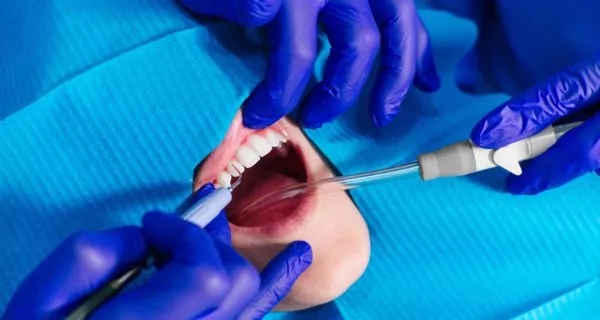
A dental deep cleaning, known clinically as scaling and root planing, is a non-surgical procedure that cleans teeth roots and gum pockets that a regular cleaning cannot reach.
- During a routine cleaning, your hygienist cleans the surfaces above and just below the gumline.
- A deep cleaning goes further, removing tartar, bacteria, and infected tissue from gum pockets that can be 4 mm or deeper.
Think of it this way: a regular cleaning is like washing the outside of a window. A deep cleaning washes the inside too, where most of the damage is hiding.
Who needs a deep cleaning?
Your dentist will recommend a deep cleaning if you show signs of periodontal disease. Common signs include:
- Gums that bleed when brushing or flossing
- Gum pockets measuring 4 mm or more
- Gums that look red, swollen, or pull away from the teeth
- Persistent bad breath that does not improve with brushing
- Teeth that feel loose or have shifted
- Visible tartar buildup on or below the gumline
Patients who have not had a dental cleaning in more than a year, smokers, people with diabetes, and those with a family history of gum disease are at higher risk.
Many patients at our Port Hueneme clinic who use Denti-Cal or Medi-Cal come to us after not having dental care for a while, and a deep cleaning is often the first step in getting their oral health back on track.
Types of deep cleaning procedures
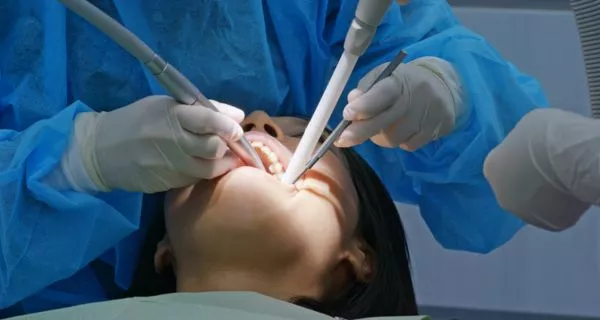
Conventional scaling and root planing
This is the standard deep cleaning procedure.
- Scaling: Removes tartar and plaque from the tooth surfaces and below the gum line.
- Root planing: Smooths the roots to help gum tissue reattach and prevent future bacterial buildup.
During this process, ultrasonic instruments are used. Through vibration and constant water irrigation, they allow for more efficient, faster, and more comfortable tartar removal, making it easier to reach deep areas.
Surgical scaling and root planing
This approach is reserved for advanced periodontitis cases where deep pockets or root anatomy prevent effective cleaning through conventional techniques.
The Procedure:
- The dentist makes a small incision in the gum to temporarily separate it from the root, providing direct visibility of the affected area.
- This allows the professional to thoroughly clean and remove tartar from areas that are impossible to reach with closed techniques.
- Once cleaned, the gum is sutured back into its original position.
When is a deep cleaning done?

A deep cleaning is recommended when gum disease has progressed beyond the early stage of gingivitis.
- Gingivitis means your gums are inflamed and irritated, but the bone supporting your teeth is still healthy. At this stage, a regular professional cleaning and improved brushing and flossing at home may be enough to reverse the condition.
- When gingivitis is left untreated, it can advance to periodontitis. At this stage, gum pockets deepen, bone begins to break down, and the infection becomes harder to control. A deep cleaning is the first line of defense at this point.
What to expect during the procedure
Before starting, your dentist will review your X-rays and measure your gum pocket depths with a small probe. This helps map which areas need the most attention.
Here is what the procedure typically looks like, step by step:
- Local anesthesia is applied to keep you completely comfortable
- The dentist uses ultrasonic or hand instruments to scale below the gumline in the treatment areas
- Root planing smooths the root surfaces to aid healing
- The area is rinsed thoroughly to remove debris and bacteria
- Antibiotic gel may be placed inside deeper pockets if needed
A deep cleaning is typically completed in two visits, spaced one to two weeks apart. Each visit covers one side of the mouth and lasts between 45 and 90 minutes. After both sides are treated, a follow-up appointment called a periodontal maintenance visit is scheduled for 4 to 6 weeks later to check how well the gums have healed.
How to prevent needing a deep cleaning

The good news is that gum disease is largely preventable with consistent daily care and regular dental visits. Here is what makes the biggest difference:
- Brush at least twice a day with a soft-bristle toothbrush
- Floss every day to remove plaque between teeth and at the gumline
- Use an antibacterial mouthwash to reduce bacteria in the mouth
- Visit your dentist every 6 months for professional cleanings and exams
- Do not smoke, as tobacco dramatically increases gum disease risk
- Manage health conditions like diabetes that affect gum tissue
Regular cleanings at Channel Islands Family Dental remove the tartar that home brushing cannot. When our hygienists catch early signs of gum inflammation at your routine visit, we can treat it before it becomes a deeper problem that requires a deep cleaning.
Benefits of a deep cleaning

- Stops the progression of gum disease before it destroys bone and tissue
- Reduces gum pocket depth, making it easier to keep clean
- Eliminates bacteria causing bad breath
- Lowers systemic inflammation linked to heart disease and diabetes
- Saves teeth that might otherwise need extraction
- Restores a healthier-looking gum line over time
For Denti-Cal and Medi-Cal patients, a deep cleaning is often a covered benefit when your dentist documents medical necessity. Our team at the Port Hueneme office will help you verify your coverage before your appointment.
Why choose Channel Islands Family Dental in Port Hueneme?
Our Port Hueneme clinic at 2601 N. Ventura Road serves patients from Port Hueneme, Oxnard, Ventura, and across Ventura County. We accept Denti-Cal, Medi-Cal, TRICARE, Gold Coast Health Plan, and most PPO insurance plans. We also offer CareCredit and our own in-house savings plan for uninsured patients.
Our patients consistently say that our team makes them feel at ease, explains each step clearly, and never pressures them into treatments they do not need. For patients who have not seen a dentist in years, we make that first step as comfortable as possible.










 Español